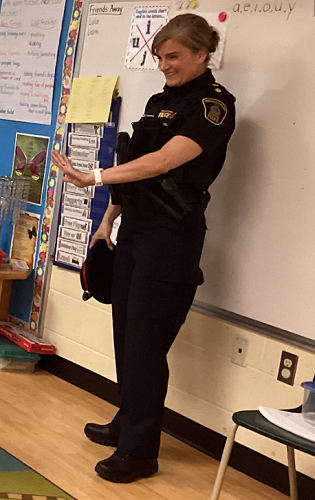
School-age 3 had a very special guest come into the program. Officer Tanya came into the room and had a discussion with us around Summer Safety. A little bit about Officer Tanya- her official ranking is “Inspector” meaning she works with a variety of divisions within the police station, including major events and traffic services. Other titles in the department are Constables (they drive the cruisers), Detectives, Supervisors (including Sargent, and Staff Sargents who work in the office with paper work), Super Intendant, Deputy Chief, and Chief Officer. Officer Tanya has worked in the field for 29 years and has worked in various roles throughout her career. Her favourite part of the day is interacting with people, which is a big part of why she became an officer. One of the highlights of her career was when she worked in homicide, and one of the most rewarding parts of this was arresting the guilty culprit in a big case.
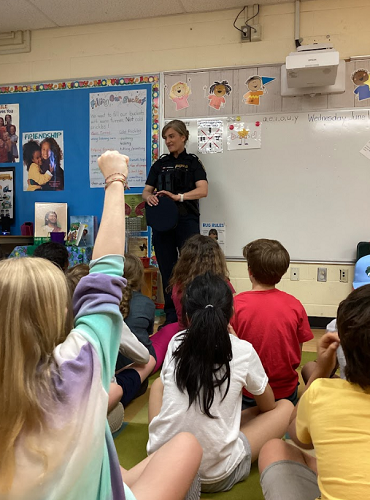
We began by talking about the importance of safety rules around bike riding. When asked what sort of things we should consider while biking, the children offered up riding on the right side of the road, or avoiding the road when possible, wearing a helmet, and Officer Tanya even suggested having a bike bell to help alert the public on the sidewalks about us coming. We also agreed that bikes should be walked across the road, because if we ride across the road we’re not always aware of what is happening around us. Sophia Rose mentioned skateboarding and how she wears knee pads and a helmet while doing so. Officer Tanya pointed out the skate and bike park that is found at Rim Park is a busy the area, especially traffic on the surrounding roads. This led to a discussion around road safety and how to cross the street. Officer Tanya talked about how we need to look left, right, and left again to ensure the way is safe and no cars are coming. Maria pointed out that if a car is coming you should wait for it to pass and not try to run quickly across the road. We also talked about the importance of “stop, look, and listen” to ensure the way is completely safe. Not only do we need to be mindful of the cars beside and in front of us, but it’s important to be aware of what’s happening behind us as well.
This discussion led to the importance of the role of an officer. Officer Tanya said that an officers most important job is to keep people safe- they call this Public Safety or Community Safety. This led to questions about what happens when someone is arrested. Officer Tanya said that there could be a variety of things that happen- sometimes, the person is taken into ‘custody’ and brought to the police station, while other times they’re given a “time out” where the person in question may just need some time to calm down away from others, this can happen in the back of the cruiser or in another safe space. Sometimes the person needs to be brought to the hospital, or other safe places as well before they can be released back to the public- arresting someone doesn’t always mean the person is going to jail. During this conversation we talked about ways that an officer may need to “Deescalate” an individual- this means that they need to calm down someone who appears heightened and can be done using the various tools on their vest- pepper spray, a taser, and even the officer issued pistol, though Officer Tanya says she’s never had to physically use any of these items, she has had to “draw” them (meaning remove and hold at the ready in a manner that indicates it can and will be used if necessary). An officer’s vest, when full of said materials, can weigh about 15lbs- this means officers need to be healthy and strong!
One of the most important items an officer has is their radio, which they refer to as their “Life Line”- this is because it connects them to every possible individual who works alongside the officers such as dispatchers, partners, teams, and their peers. The dispatchers are the most important contacts an officer has as they are the ones who knows the location of officers, individuals needing help, and they keep the officers safe during the situations they may encounter during their shift.
The final thing we talked about was the importance of calling 911- and what happens if a false 911 call is made. When someone calls 911 all of the emergency services are contacted and dispatched. While this is important when an emergency is happening, it can be dangerous when a false alarm or false call is made- this is because it’s taking those resources away from those who may actually need them, and if a false call is made and the emergency services are attending to that, they can’t go to those who actually need the help when a real call comes through. Therefore, it is very important that we only call 911 when a real emergency is happening.
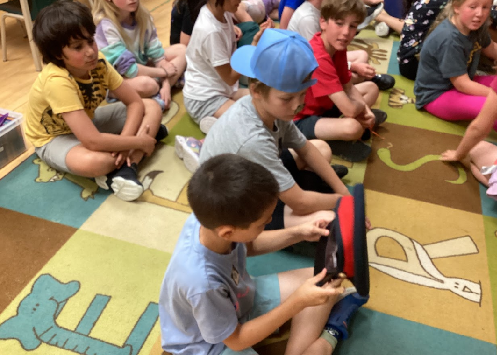
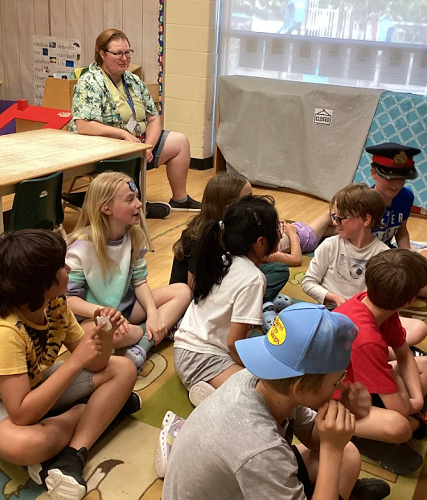
At the end of the visit we got to pass the hat around and try it on if we liked, as well as recieved a "Junior Officer" badge sticker to wear! We want to thank Officer Tanya, and all of the officers in our region, for their continued service to keep us safe. We hope our children take all of this Summer Safety information into consideration as they enter the busy months of July and August. Have a safe summer school-age 3!