

Our classroom is rich in diverse cultures, with both children and educators coming from different parts of the world. Recently, the children from Indian families celebrated Diwali, and they brought their experiences to class by sharing stories about the dances, colours, and sweets associated with the festival. Based on the children’s interest, the educators decided to research and learn more about Diwali. We brought books to read with the children and selected an English song titled “Happy Diwali.” The children were excited and enjoyed singing along. Through our discussions, they learned that families around the world celebrate different festivals, and Diwali is one of them. Six children and two students from Conestoga College in the classroom celebrate Diwali. Lucy went home and told her mother that her friends Nicole and Natalie celebrate Diwali. From our research, we learned that Diwali is a celebration of colour, light, knowledge, and prosperity. Families clean their homes and decorate them with colourful lights, rangoli, and sweets. With this understanding, we decided to create a variety of experiences for the children.
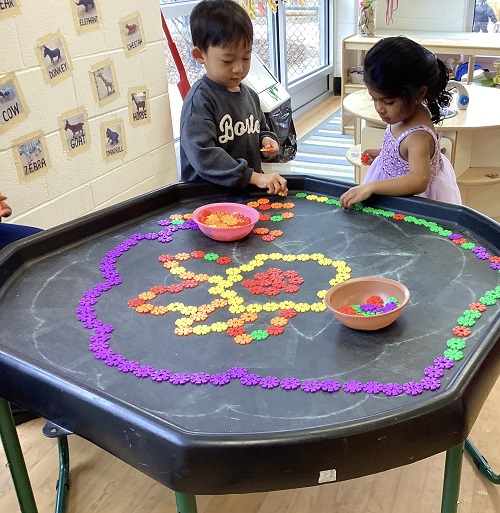
We introduced a flower-and-water activity, which the children loved. They placed flowers in water and watched them float. This represented purity, devotion, prosperity, and a connection to nature and the divine. As educators, this experience encouraged us to wonder, ask questions, and learn even more. We also brought out a rangoli experience using flower connectors. This allowed the children to follow patterns, trace designs, and create their own artwork. Anvika was deeply engaged and worked hard to complete her rangoli using beautiful patterns. Through conversations with Arshdeep, we learned that two important Diwali colours are yellow and orange. The children used these colours to make candle crafts, which we later displayed on our classroom board. One of our students, Devi, helped create a beautiful rangoli—a colourful design placed at the entrance to symbolize welcome good fortune. She used glue and coloured sand, and many children eagerly participated in decorating the rangoli carpet.
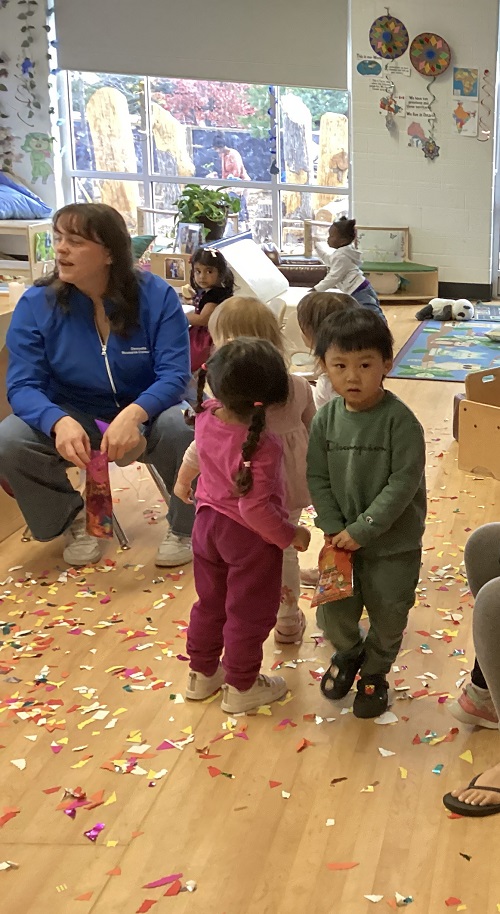
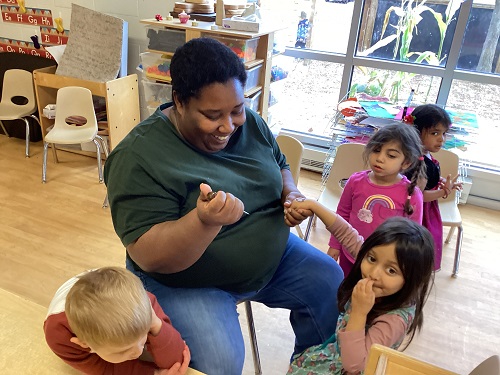
Mehendi (henna) is a traditional activity where women and girls decorate their hands with intricate designs. To honour this tradition, we invited parents to participate. Rudra’s mom, along with Arshdeep and Shahina, volunteered to create beautiful patterns on the children’s and staff members’ hands. Many children who had permission from their parents were excited for their turn. Some even requested henna on both hands and patiently waited for it to dry. The staff also enjoyed this meaningful cultural experience. To represent fireworks, we cut shiny paper and placed it inside small bags. The children blew air into the bags and released the sparkling pieces, filling the classroom with colourful “paper fireworks.” It was a joyful and exciting activity for everyone.
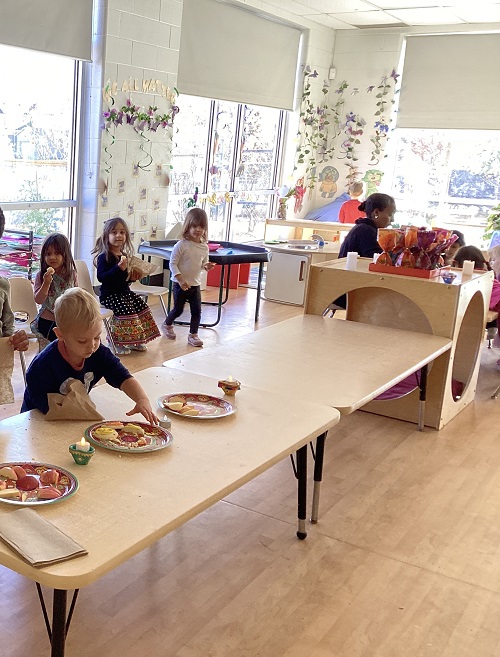
As part of our celebration, parents were invited into the classroom. families joined us for henna, rangoli, fireworks, and Diwali treats. Although we initially tried to find nut-free traditional Diwali sweets, it was challenging. Thankfully, Walmart had vanilla cookies decorated in Diwali colours that were nut-free. We are also grateful to the Vaithiswaran family for finding another nut-free treat to share with the children.
This celebration brought students, parents, and educators together. It created a meaningful space for us to learn, celebrate, and appreciate the beauty of Diwali. As educators, we became co-learners—discovering new traditions alongside the children and deepening our understanding of the diverse cultures within our classroom.