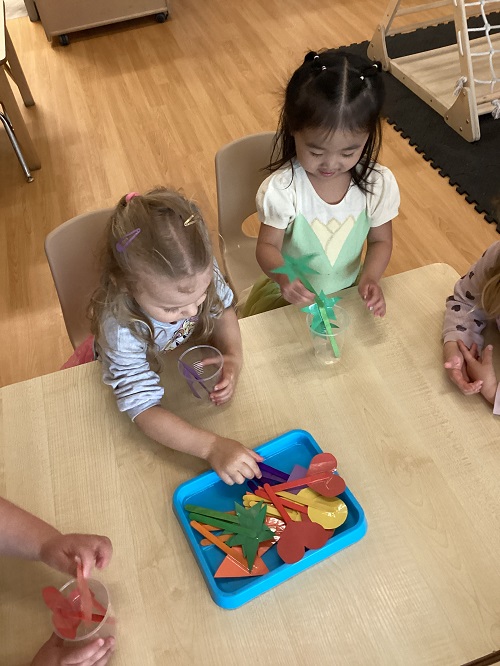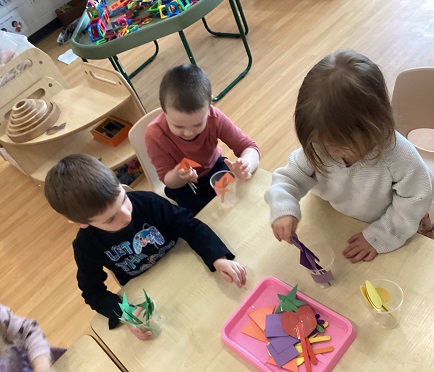
As part of our ongoing exploration of shapes, various shape cut-outs, cups with shapes attached, and classroom materials were added to the learning area to encourage the preschoolers' investigation of shape recognition and sorting. We wondered what the children already knew about shapes and where they might discover them in their environment.
The children eagerly explored the materials by picking up, examining, matching, and sorting the shapes into the correct cups. As their curiosity grew, the learning extended beyond the table and into the classroom. The preschoolers became shape detectives, searching the room for objects that matched the shapes they were sorting.
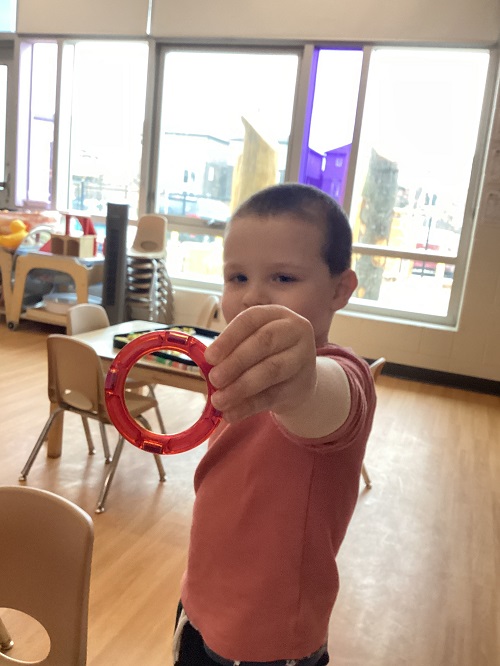
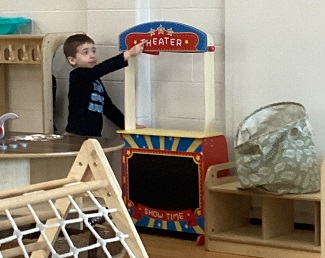
During their exploration, one child pointed excitedly to a shape on the wall and shared, “I found a heart!” Another child proudly announced, “The magnetic tile is a circle!” As the investigation continued, the children discovered triangles in pop-it toys, heart shapes on classroom materials, toys, decorations, and even on a teddy bear’s paw. They also noticed stars on the lemonade stand. The children carefully compared the shapes they found with the sorting pieces, making meaningful connections between the learning materials and the objects they encounter in their everyday environment. Their enthusiasm for shape hunting continued beyond the classroom. During outdoor play, several children noticed that the tents were shaped like triangles and eagerly pointed them out. At lunch and snack time, the children continued identifying shapes in their food, demonstrating that they were beginning to recognize and apply their understanding of shapes in a variety of settings throughout their day.
This ongoing exploration supported shape recognition, observation skills, vocabulary development, and the ability to make connections between classroom learning and the world around them. The children also strengthened their fine motor skills and hand-eye coordination while grasping, sorting, and placing the shapes into containers. Rich conversations emerged as the children shared their discoveries, discussed similarities and differences between shapes, and learned from one another.
This hands-on learning experience supported shape recognition, spatial awareness, language development, and cooperative play. The children showed excitement and pride in their discoveries as they worked together to explore the many shapes found throughout their classroom environment as well as outdoor surrounding environment.
As the children continue to investigate shapes in their everyday surroundings, we wonder what other mathematical connections and discoveries they will make next!